lunes, 10 de diciembre de 2018

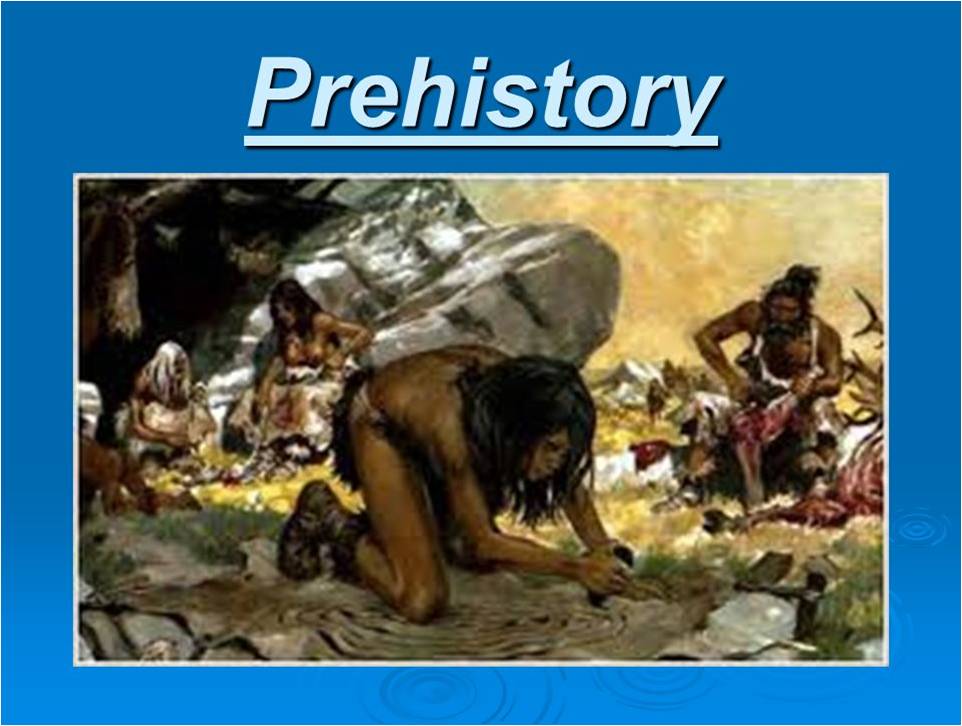
Prehistory en 1º ESO

TÍTULO UNIDAD:   Prehistory.  1º ESO.  Geografía/Historia.


INTRODUCCIÓN GENERAL: 

En esta UD se han trabajado seis objetivos con el fin de que los alumnos adquieran  conocimientos  de este tema en L2. Está programada para trabajarla en un aula "sección bilingüe", el alumno no tiene libro propio en inglés, el material es presentado por el profesor. (Hay contenidos que se trabajarán en L1). El centro escolar está en un entorno rural con una realidad económica media-baja.

El primer objetivo que señalo" Know the main stages in Prehistory"  se funde en el tercero y cuarto  "List the traits of hunter-gathering societies from the Paleolithic Age and Understand the changes that were part of the Neolithic revolution"  pues los alumnos serán capaces mediante la realización de un andamiaje de transformación (Línea del tiempo) de conseguirlo. Se les proporcionarán las estrategias y tareas adecuadas para su consecución.


1. Know the main stages in Prehistory.

2. Recognise the main transformations that shape the process of   hominization.

3. List the traits of hunter-gathering societies from the Paleolithic Age.

4. Understand the changes that were part of the Neolithic revolution.

5 . Explain the changes linked to the introduction of metallurgy.

6. Understand and know about these first examples of culture and   art by humankind.


Las TAREAS a realizar son variadas y de distinto tipo con el fin de mantener la motivación en el alumnado.


 ANDAMIAJE DE RECEPCIÓN

. Vídeo Academia Play Prehistoria (LISTENING)

https://www.youtube.com/watch?v=G2tUkEvo_lM

.  Word search  (con las diapositivas correspondientes en la pantalla) (READING)


PALAEOLITHIC                                                                                                                                       

NEOLITHIC


. Are the following sentences true or false? (READING)

-          The earliest hominids lived in China.

-          Agriculture was developed in the Neolithic Age.

-          The  remains of Homo antecessor were found at America.

-          Ardipithecus ramidus was the first to walk upright.

-          Australopithecus afarensis did not walk upright.

-          Homo habilis was from Ethiopia.

-          Homo erectus was the first to emigrate to America.

-          Homo neanderthalesis lived in Europe during Ice Age.

-          Homo sapiens migrated of Africa over two millions years ago.

-          Dolmen is a large and vertical stone.


ANDAMIAJE DE TRANSFORMACIÓN

.Quizzes

   - What do you know  about the process of hominization? (SPEAKING and WRITING)

  - What do you know  about the Palaeolithic Age? (SPEAKING and WRITING)

  - What do you know  about the Neolithic Age? ? (SPEAKING and WRITING)

  -  What do you know  about stone megaliths? ? (SPEAKING and WRITING)

  - What do you know  about the process of hominization? (SPEAKING and WRITING)


. Realiza una línea del tiempo  con el tema "The process of hominization". (WRITING)


. Un alumno del aula es un hombre del paleolítico que ha venido del pasado, la clase le entrevistará en inglés (SPEAKING)

. El mismo ejercicio anterior con un alumno que fingirá ser del neolítico.(SPEAKING)


ANDAMIAJE DE PRODUCCIÓN

. Complete the  sentences: (WRITING)

-          Corridor tombs: ………………… together   forming   a …………… and …………...

-          The invention of …………… allowed food to be stored and cooked in clay pots and bowls.

-          Nomads used bifaces to dig, and …………. skins

-          In the Neolithic Age, humands   built their…………. out of ……………

-          Paintings and ………………………….can be found in a cave art.

-           Nomads   hunted   …………. and   gathered   fruit and molluscs.

-          The discovery of fire by …………………………. 1.5 million years ago allowed to light their caves, cook, make ……………… and protect themselves from dangerous ……………. and the cold.

-          In the Neolithic Age, humands   invented  new  ………………. …………….. like the hoe and sickle.

-          They   invented   stone ……………..

-           Menhir is a ………., vertical ………

-          Two or more ……………covered with a large ………. stone is a dolmen.

-          Many menhirs  together in the form of a circle is a………………


. Preparación de cuatro murales en clase: Hominization, Palaeolithic, Neolithic and Stone Megaliths.


ACTIVIDAD FINAL

Write a composition about "How would be your life in the   Neolithic Age?"(WRITING)

 https://quizlet.com/create-set


Para realizar esta UD necesitaré de 6 sesiones distribuidas de la siguiente manera, así mismo se señalarán las actividades correspondientes a cada una de ellas. Se utilizará como  un PowerPoint preparado por el profesor (LISTENING, READING, SPEAKING, WRITING)

1º sesión

Se  proyectará un vídeo en español de Youtube, Academia Play (LISTENING)) https://www.youtube.com/watch?v=G2tUkEvo_lM

-          Speaking sobre lo visto.

2º sesión

-          Speaking (Repaso de la anterior sesión)

-          Se trabajará el objetivo 2. PowerPoint, diapositivas 3-9.

-          Realización de una línea del tiempo (Andamiaje de transformación):

 https://www.tiki-toki.com/

3º sesión

-          Speaking (Repaso de las anteriores sesiones)

-          Se trabajará el objetivo 3. PowerPoint, diapositiva 10.

-          Word search  Palaeolithic (Andamiaje de recepción)

-          Las dos primeras actividades del Quizzes.

4º sesión

-          Speaking (Repaso de las anteriores sesiones).

-          Se trabajará el objetivo 4 y 5. PowerPoint, diapositiva 11.

-          Word search  Neolithic (Andamiaje de recepción).

-          Actividad:  Are the following sentences true or false? (READING).

 Esta tarea cumple una doble función: Andamiaje de recepción (me aseguro que el alumno extrae la información necesaria para su realización) y Andamiaje de transformación pues hay frases relacionadas con objetivos trabajados en sesiones anteriores. Hay una frase de este ejercicio que sirve como sondeo de la siguiente sesión: "Many menhirs together in the form of a circle is a………………"


5º sesión

-          Speaking (Repaso de las anteriores sesiones).

-          Se trabajará el objetivo 6. PowerPoint, diapositiva 12-15.

-           Actividades del Quizzes (Andamiaje de transformación).

-          Complete de sentences (Andamiaje de producción).

6º sesión

-          Speaking (Repaso de las anteriores sesiones).

-          Preparación de cuatro murales en clase (Andamiaje de producción).

-          Actividad final: a composition.

-          https://quizlet.com/create-set


EL ENLACE RELACIONADO CON LA ACTIVIDAD 3.1 ES EL SIGUIENTE:

https://drive.google.com/open?id=1x8qxKPXQWiRnMAM72bec_MAbAVLBVpOu


Mª JESÚS TOBAR PÉREZ


Libre de virus. www.avast.com

viernes, 7 de diciembre de 2018

Diet and nutrition

I have developed a didactic unit which title is "Diet and nutrition" for the subject Biology and Geology of 3rd of ESO.


I have chosen this unit because of the direct impact it has on the students.With it I try to improve their way of feeding and know the consequences and possible diseases that can lead to poor diet.


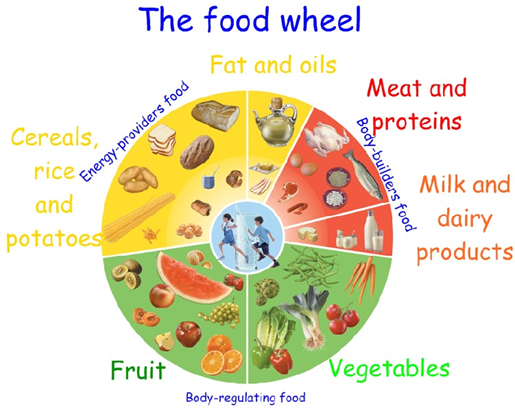
For this, they must first know the vocabulary.Then, we will work out which nutrients predominate in each food, helping us with the food wheel. Later, we will see what foods are healthy and unhealthy, linking with the knowledge of a balanced diet.Some types of diets will also be worked on, highlighting the benefits and characteristics of the Mediterranean diet. At the end of the unit will be investigated on possible consequences and diseases derived from poor diet.


For this unit we will dedicate approximately 7 sessions. Following the scaffolding method, they are going to propose simple activities that are going to be complicated little by little.


In session 1, vocabulary activities are carried out, words are combined with images, explanatory videos are displayed, ... while the verb tenses in English (present, past and future) are reviewed. In this session we mainly work on the listen and speak skills.


In session 2 we continue with this dynamic, but we add the skill "read", reading an article that serves at the same time to increase the vocabulary. In addition, we work in English "Do you like ...?", with possible answers.


In session 3 we focus on the "food wheel", trying to understand their meaning well because it is important to ask many questions about it (speak). In this session, as in the previous ones, we will use the normal board, to make schemes, and the digital board, to project images and videos (listen).


In session 4 the concepts of diet and balanced diet are explained. In addition, questions will be asked (speak) in groups, the answers will be written down (write) and there will be a sharing. In this session, in addition to speaking and writing, they work in groups, which allows instilling respect for others and socialization. At the end of this session, they are explained how to prepare an oral presentation about a disease (description, causes and prevention), which must be done at home and will be presented in session 6.


In session 5 the most used skill is "write", with fill-in-the-blank exercises and writing an e-mail (which also allows me to review this way of writing in English). We will complete this session with an activity different from the other proposals so far. It consists in the visualization of a video of a person with anorexia, and then reflect in common on it. With this, we work on sensitivity and reflection.

At home, they should get into my symbaloo, to see a video that I posted, which summarizes everything we have learned so far in this unit.


Session 6 is purely oral (speak). With this activity we will get them to investigate and expose the disease they have chosen (use of TIC'S), in addition to facing an exhibition in front of their classmates (a fact that usually costs them a lot). It is a couple activity, which is usually more enjoyable and encourages companionship.

At home, they should look for information on the benefits of the Japanese diet.


Session 7 completes the unit by viewing a video on the Mediterranean diet. Afterwards, the benefits of the Japanese diet are shared and we compare both diets.

Finally, they will carry out an interactive exercise with educaplay, which serves as an evaluation of the unit.


As an extension activity you can propose that they prepare a menu for a week, following the patterns of the Mediterranean diet. This activity can be done in pairs or small groups (3 people).


In the following links I present my unit and my activities:


3.1. Didactic unit template:  https://drive.google.com/open?id=1t1-_EToy90b4OOl1iqLzJsIc38AATAxZ


3.2. Design of materials: https://drive.google.com/open?id=1IP_nevNzY59WfX5HT9Dj5aqd-Il4wWSE


By Amparo Cabrera Gómez.


Libre de virus. www.avast.com

martes, 4 de diciembre de 2018

FUNCTIONS

FUNCTIONS


Course/Level: 4º ESO

Subject: Mathematics                   

Teacher: Ana Isabel Cruz Romero


INTRODUCTION

Within mathematics, graphic representation functions become a very useful tool for students to solve problems and situations in real life, acquiring great skill in problem solving and a critical sense in the discussion of possible outcomes.


The decisive mathematics in the achievement of the general objectives of obligatory education. During their learning the students develop their capacity of logical reflection and their capacity of thought and abstraction.


At the end of the didactic unit the student will be able to:

·         Understand and interpret different forms of mathematical expression and incorporate them into the language and the usual modes of argumentation.

·         Use mathematical knowledge to organize, interpret and intervene in different situations of reality.

·      Recognize and raise situations in which there are problems that can be formulated in mathematical terms, solve them and analyze results using appropriate resources.

·         Reflect on the own strategies used in the mathematical activities.

·         Incorporate habits and attitudes typical of mathematical activity.


The development and acquisition of the concepts of this didactic unit supposes the knowledge of the idea of function, reading, description and interpretation of tables and graphs, graphic representation of functions, and study from the formula developed in the previous courses of the stage. It needs an adequate use of numbers and the use of algebraic language.


ORGANITATION AND DISTRIBUTION

The unit will be developed in seven sessions of fifty minutes.

Sessions 1 and 2: Concept of function. Linear function.

Session 3. Quadratic functions. Parables.

Session 4. Functions with absolut value.

Session 5.- Inverse proportionality functions.

Session 6.- Functions in our daily life

Session 7.- Functions sorround us


SESSION 1 Y 2: CONCEPT OF FUNCTION. LINEAR FUNCTION.

Task 1: Lineal functions vocabulary

This activity, created with "learningapps.org", is a crossword to work the vocabulary of linear functions.


https://learningapps.org/6106784


Task 2: Decide if the following graphs are functions or no.


Task 3: Discuss these questions with a partner:

a) Complete the table

b) Make a graphic representation of the function, using a table.

X

-1

0

2

3

Y = 5x – 2


 Task 4: In groups, discuss the text below and fill in the gaps.

https://learningapps.org/6106910


SESION 3: QUADRATIC FUNCTIONS

Task 1: I have represented a generic parable in Geogebra, and the student must observe how changing their coefficients is changing its form, and according to the parameter the graph modifies its shape in a different way (concave or convex, more open or more closed, placed higher or lower)

 https://ggbm.at/dmq6xb35


Task 2: In this activity, students work through a series of scaffolded quadratic graphing challenges to develop their proficiency with standard, vertex, factored, and other quadratic function forms.

https://teacher.desmos.com/activitybuilder/custom/5605bb6200701ed10fb0931a#preview/4fdb449e-b51f-46dd-a6ae-14a7019ad18a


SESSION 4: FUNCTIONS WITH ABSOLUTE VALUE
 Task 1: Here, we are a fantastic activity to show what the equations are, how they are graphed, and how to alter them.
https://teacher.desmos.com/activitybuilder/custom/58b97fa91c41591317c80f1b#preview/3dc2e0b2-0958-440e-8ae5-6b0dc01aef44
 
 Task 2: And here, we have an absolute value game to practice this concept, which we need to understand functions with absolute value:
https://www.crctlessons.com/absolute-value-equations-game.html
 
 SESSION 5: INVERSE PROPORTIONALITY FUNCTIONS

In this session the students will work in pairs, they will have to choose a function from the list below, and they will have to represent it in a paper for graphic representations.

http://msenux2.redwoods.edu/IntAlgText/chapter7/section1exercises.pdf


SESSION 6: WE INVESTIGATE FUNCTIONS IN OUR DAILY LIFE

It is a practical session in which each student will explain to their classmates an example of a real-life function, it can be a graphic in a newspaper, the figure that describes an object when it is moving, etc


SESSION 7: WE DISCOBER FUNCTIONS SURROUND US

We will exit outdoor (natural environment, monuments, museums ...) to observe where functions appear.


LINKS:

·         UD_Funtions_Task_3.1:

https://drive.google.com/open?id=1sGWEeu4qAvCbf6_69A-Eby3B8lG8JK-p


·         Presentación con teoría, ejemplos y propuestas de ejercicios.

https://drive.google.com/open?id=1TTX5_3pQ0FPADW7yGh-2HQPGu6uojgCA


ANA ISABEL CRUZ ROMERO


Libre de virus. www.avast.com

Electric Current

My didactic unit title: Electric Current

This is the first unit of Intermediate Vocational Training Cycle "Electromechanical Maintenance" in the subject of Electricity and Electrical Automatisms.

I have considered the following learning outcomes:
- Understand the process of generation and transport of electric power. 
- Identify the electrical circuit and the parts that compose it. 
- Handle the most important electrical quantities. 
- Apply Ohm's law. 
- Know what the Joule effect and its consequences are. 
- Apply the concepts of power and energy. 
- Make measurements in direct current.

The objectives in this unit are:
-Generation of electric power. 
-Transportation of electric power. 
- Electrical circuit. 
- Electrical magnitudes. 
- Joule effect. 
- Continuous electric circuit. 
- Ohm's law. 
- Power in DC circuits. 
- Electric power. 
- Electrical measuring devices.

LESSONS, ACTIVITIES AND RESOURCES

1st session
We will start the didactic unit with an introduction to the direct current (DC) and the alternating current (AC) and its magnitudes.

Presentations:

-          Direct Current Circuits

-          Direct Current Cirtuits 2

Videos:

-          Difference between AC and DC current


2st session
We'll identify and design the electrical circuit and the parts that compose it.Furthermore, the most important electrical quantities will be handled.

Videos:

-          Introduction to circuits

Interactive activities:

-        Electric Circuits 


- True or False activities (Book)  

- Design electric DC Circuits

3st session
We'll apply Ohm's law and we'll know what the Joule effect and its consequences are. Besides, we will apply the concepts of power and energy.

Videos:

-          Ohm's Law

-          Joule's Law

Solve problems:

             - Worksheet nº1: Problems about resistance association
             - Worksheet nº2: Problems about Ohm's Law


4st session
We will make measurements in direct current.

Videos:

-          How to measure DC Voltage and Current

-          Electric conductors and Insulators

Practice report:
             - Worksheet nº3: Practices about direct current measurements


Bertín Parga Pena

Libre de virus. www.avast.com

Consejería de Educación y Empleo
Junta de Extremadura

lunes, 3 de diciembre de 2018

MATTER AND ITS PROPERTIES


My didactic unit is entitled "Matter and its properties"  for second year of ESO students of the subject Phisics and Chemistry.


The subject matters are what is matter, matter at different scales, measurement, mass, volume and density.


The objectives in this unit are:

- To recognise the general properties of matter.

- To classify matter in orders of magnitude using scientific notation.

- To distinguish the scales of observation of matter.

- To define different quantities, their units and how some of them are measured.

- To represent quantities, their units and their symbols.

- To use the International System of Units.

- To learn the multiples and submultiples of the units and transform one to another.

- To learn the concepts of mass and volume, their units and how each is measured.

- To understand the concept of density, its different units of measurement and how it is determined.

- To distinguish between mass and weight, between density and viscosity, between volume and capacity.

- To convert units of volume to units of capacity.

- To analyze density as a matter property which is independent of the amount of the matter.


DEVELOPMENT OF THE UNIT: CLASSROOM SESSIONS, ACTIVITIES TO BE PERFORMED AND RESOURCES

1st session

We will begin the didactic unit with a brainstorming of what students know about the subject. We will support this activity with a few tokens to fill out.
We continue with specific vocabulary about the matter with a listening and then expose the content by supporting a web page and I've also prepared a letter soup. We end with a more detailed explanation of the matter and its properties by a website.

Task 1: Brainstorming to detect previous knowledge

https://www.worksheetworks.com/pdf/Qks/BL5/WorksheetWorks_matter_1.pdf

Task 2: Glossary of specific terms linked to the unit

https://quizlet.com/56504614/flashcards

https://www.educaplay.com/es/recursoseducativos/3018878/html5/matter.htm

Task 3: Matter and its properties

http://schools.bcsd.com/fremont/5th_sci__matter_properties_of_matter.htm


2nd session

My second session will be developed with exercices about scientific notation and scales supporting me in an online exercises website. Then I explain the measuring and finally we see International System of Units.

Task 4: Exercises about scientific notation and scales

https://www.khanacademy.org/math/pre-algebra/pre-algebra-exponents-radicals/pre-algebra-scientific-notation/e/scientific_notation

Task 5: Measuring

Task 6: International System of Units: multiples and submultiples

http://www.themeter.net/mu-so_e.htm


3rd session

In this session we will perform several online games to explain common mistakes and concepts of volume and capacity. We ended up explaining the density with a video.

Task 7: Common mistakes.

http://studyjams.scholastic.com/studyjams/jams/science/matter/properties-of-matter.htm

http://studyjams.scholastic.com/studyjams/jams/science/matter/solids-liquids-gases.htm

http://www.learninggamesforkids.com/changes-in-matter-games/changes-in-matter-word-search.html

Task 8: Volume and capacity

http://splash.abc.net.au/home#!/media/1386573/the-metrix-capacity-1

http://splash.abc.net.au/home#!/topic/496722/volume-and-capacity

Task 9: Density

https://www.youtube.com/watch?v=SimFy9wOMXY


4th session

In the last session we will go to the laboratory and do some experiment on densities. Before we will see some video that explains the experiment. In the end the students will do a self-assessment.

Task 10: Go to laboratory: is density independent of the amount of matter?

https://www.youtube.com/watch?v=MzsORE0ae10

https://www.youtube.com/watch?v=pmHxYE_vDBs

Task 11: Self-assessment

http://www.edinformatics.com/math_science/mvd_quiz.htm


CLIC didactic unit design link:

https://www.dropbox.com/s/osygexti1d0xdft/plantilla%20aicle%20Felipe%20S%C3%A1nchez.pdf?dl=0


Felipe Sánchez Pulido

domingo, 2 de diciembre de 2018

RV: The Earth in the Solar System


My Didactic Unit: The Earth in the Solar System

This unit is the first one on the fourth grade of Primary in the subject of Social Science. It is an attractive lesson because children of eight and nine years old love so much the space and the planets. They are very curious in this topic.

I have considered the following learning outcomes:

  • To indentify and name the eight planets in the Solar System.
  • To classify the planets in closer and further than the Sun.
  • To know the two movements of the Earth.
  • To know how the day, the night and the seasons are taken place.
  • To distinguish the three layers of the Earth.
  • To identify the satellite of the Earth and its phases.
  • And above all, to value L2.

The contents are:

  • The Sun and the eight planets
  • The Earth´s movements: rotation and revolution
  • The Moon´s phases.
  • Layers of the Earth

The final tasks are:

  • Role playing in groups: each one is a Solar System and students will explain the caracteristics of each planet.
  • A handicraft (of foam) marking the layers of the Earth.

I will make use of seven sessions of an hour.

• In the first session the students are asked for their knowledge about the name of the planets and the seasons using songs (songs are motivational for the children). We will explain that the Solar System is made up of the Sun (a big star), eight planets and other celestial bodies. They can see the orbits with a video and the different characteristics of the planets (if they are nearer and further than the Sun) with an informative video and a song.

https://www.youtube.com/watch?v=uVVfALI4MxU  https://www.youtube.com/watch?v=z8aBZZnv6y8 https://www.youtube.com/watch?time_continue=92&v=RJ2bQWH6GCM

https://www.youtube.com/watch?time_continue=37&v=ymUHlV074OQ

• During the second session let us talk about the learning last day in pairs and answering questions:
 Then they will create a Solar System on line. (We don't can forget the presence of a digital board and tablets in the classroom) Also they will draw a Solar System. If they have enough time they can learn more with another video (extension activity)

http://www.kidsastronomy.com/fun/make-a-solar-system.htm

http://www.scholastic.com/teachers/activity/solar-system-6-studyjams-interactive-science-activities

http://www.kidsastronomy.com/solar_system.htm

• In the third session children lets us talk about the learning last days and the will play on line to identify the different planets. Also they will learn about the two movements of The Earth with videos (rotation and revolution and what they cause: day/night and the seasons). At home they can visit the video to make this experiment with their family to know how is the day and how is the night: I will ask for them which is the satellite of the Earth and let us watch a video about the phases of the moon.

http://www.softschools.com/science/space/solar_system_kids_games/

https://www.youtube.com/watch?v=cDed5eXmngE

https://www.youtube.com/watch?v=ksGiLaIx39c

https://www.youtube.com/watch?v=9VwLOR0m6mQhttps://www.youtube.com/watch?v=AQRNzepe4wI

https://www.youtube.com/watch?v=bWeaQctUp1c

• In the fourth session we will remember the contents with questions. And we will watch a video of the first man on the moon (a real document):
 Children will listen a text to complete on their notebook, they will do a puzzle of The Earth in pairs and we will watch a video about the layers.

https://www.youtube.com/watch?v=yaYHa7CX_vM

http://www.primarygames.com/holidays/earth_day/games/planetearthjigsawpuzzle/ 

https://www.youtube.com/watch?time_continue=65&v=o1PzX_Mq7ug

• In the fifth session they will complete a diagram of main contents (mind map) and a match exercise on the notebook. Then they will have fun making a handicraft (the first final task) with these instructions:

  1. Colour the foam ball with  felt-pens: Brown for the Geosphere, blue for the Hydrosphere and white for the atmosphere.
  2. Label the layers with small sticks and play-dough.


 • The sixth session will be role-playing (the second final task). In small group listen to the song and write sentences of each planet to prepare the perform:

https://www.youtube.com/watch?time_continue=37&v=ymUHlV074OQ

https://www.youtube.com/watch?time_continue=92&v=RJ2bQWH6GCM


 • At last, I will use a seventh session to do a test about the topic:

  • What is the Solar System made up?
  • Draw the Solar System. Then name the planets and colour the cosest planets red and the furthest ones blue.
  • What are the two movements of the Earth? What do the cause?
  • Name the seasons.
  • What´s the name of the satellite of the Earth?
  • Draw the phases os the Moon.
  • What are the different layer os the Earth?


And a self assesment: Do you understand the lesson…..

  1. Excellent?
  2. Ok?
  3. Not very well?

LINK

Olga Mesías Zafra