

lunes, 19 de diciembre de 2016

The end of the dying planet
"The end of the dying planet" , unidad AICLE dirigida a los alumnos de 3º ESO de inglés.
Esta unidad trata de concienciar al alumno de la importancia de cuidar nuestro planeta y, al mismo tiempo, trata de hacerles pensar en la posibilidad de la creación de nuevos asentamientos en el espacio.
Para ello, los alumnos tendrán que ser capaces de crear predicciones a partir de los conocimientos aprendidos y diferenciar el uso de presente continuo para acciones momentáneas o al de su uso futuro.
Esta unidad se desarrollará a lo largo de 5 sesiones:
1ª sessión: PRESENTATION - Arranging to meet. Toma nota sobre la agenda de una secretaria y completa los espacios en blanco. Decide si las diferentes acciones se refieren a presente o futuro.
VOCABULARY - space, shuttle orbit, Earth, Moon, settlement, house adventurers, gravity, earthquake, natural disasters
GRAMMAR - Revisión del presente continuo. Presente continuo con intención futura. Distintos tipos de futuro (will, might, going to)
2ª sesión: READING - how our solar system will die https://futurism.com/death-from-the-skies-how-our-solar-system-will-die/
 | futurism.com The sun. (Image Source) Just as the life on Earth is dependent upon the energy from the sun for sustenance, so does the fate of our solar system hinge on the sun's ... | |
VOCABULARY - Phrasal verbs
3ª sesión: LISTENING - Entrevista con David Attenborough https://youtu.be/z0B4KEXVaqo
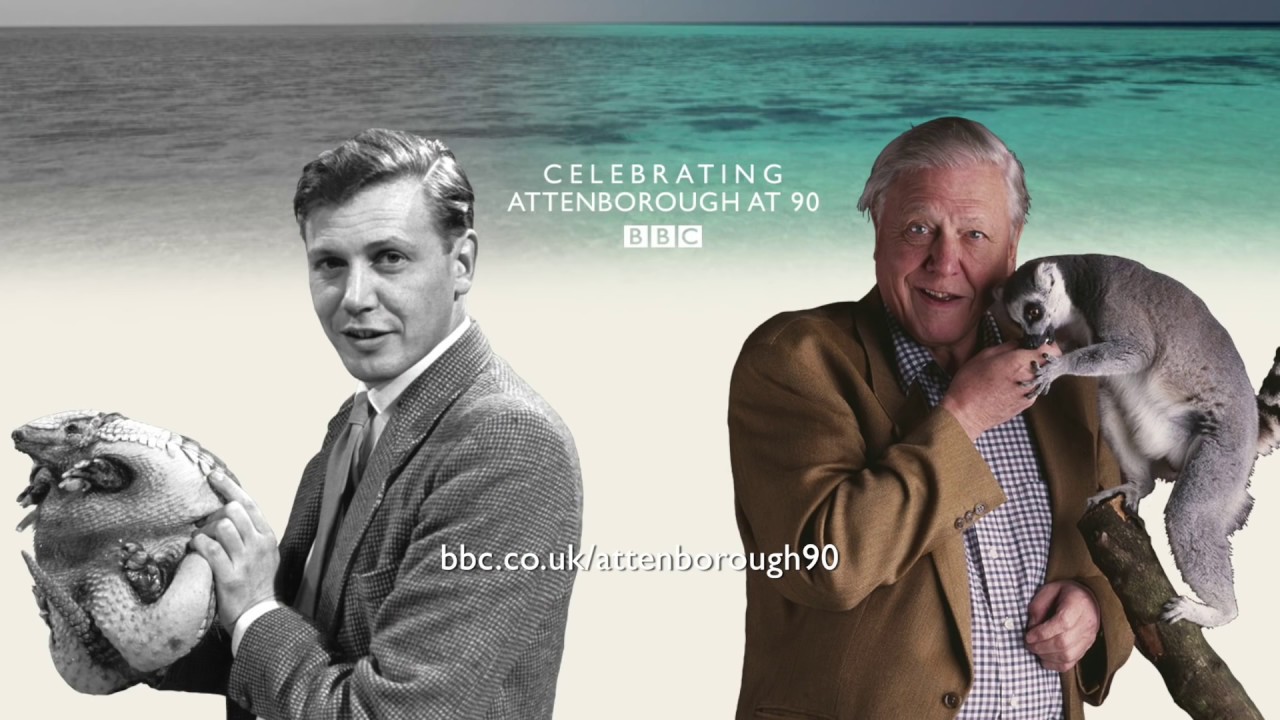 | youtu.be Programme website: http://bbc.in/1ry1jsa Interview with world renowned naturalist Sir David Attenborough. Attenborough at 90. | |
SPEAKING - realizar el test y discutir con sus compañeros http://LearningApps.org/display?v=piwvy4pot16
4ª sesión : WRITING - Producción de un texto explicativo a través de frases para producir un párrafo coherente. Exposición del mismo y opinión personal.
5ª sesión: FINAL TASK - actividades de repaso de gramática, vocabulario y escrito. Test final
Lucía González Villanueva
Healthy Habits

HEALTHY HABITS
UNIDAD DIDÁCTICA: Healthy Habits
INTRODUCCIÓN
La Unidad didáctica "Healthy Habits" va dirigida a alumnos de 5º curso de E. Primaria.
El Área de esta unidad es Physical Education.
Se pretende que el alumnado conozca y aplique en su vida diaria los hábitos saludables. Además, se persigue que los alumnos conozcan y utilicen los conceptos y expresiones relacionados con los contenidos del área y de dicha unidad en la lengua inglesa (L2).
En cuanto a la temporalización ésta, se llevará a cabo en el primer trimestre para poder ver su aplicación en el resto del curso escolar. Tendrá una duración de 4 sesiones.
Los objetivos que pretenden conseguir con esta unidad son:
- To learn to do a good warming-up before doing some physical exercise.
- To know and practice different sports
- To know what kind of food they should eat to eating healthily
Entre las tareas a realizar para conseguir los objetivos destacan:
- To play different sports and physical activities
- To watch an interesting video about healthy habits
- To play different games about correct and incorrect body positions
- To read an article about an healthy diet
La distribución de los contenidos y actividades a lo largo de las sesiones sería:
1st sesión: It is dedicated to explain the previous ideas about healthy habits .
-To watch an interesting video about healthy habits:
https://www.youtube.com/watch?v=fjM4-1dJQec
| | www.youtube.com Esta es una estrategia educativa, del Departamento Administrativo del Deporte, la Recreación, la Actividad Física y el Aprovechamiento del Tiempo Libre Colde... | |
http://www.sesamestreet.org/toolkits/healthyhabits
| | www.sesamestreet.org Sesame Street Parents offers parenting tips and supporting media to help your children through their milestones. | |
2nd sesión: Vocabulary
Nouns: tennis, basketball, rugby, hockey…coach, players, referee, team, fish, fruit, vegetables, menu, home-made, fast-food, fat,…
Verbs: beat, win, lose, draw, play, get fit, train, warm up,do, go, get injured, cut down, eat out,…
Adjectives: takeaway, sweet, wholemeal, frozen,…
Prepositions: before, after
3rd sesión: Warm up
Activities: https://efcarmenconde.files.wordpress.com/2012/10/unit-2-wup.pdf
| efcarmenconde.files.wordpress.com P.E. NOTEBOOK. 1º E.S.O. UNIT 2: THE WARM-UP Teacher Flor Izquierdo Vaquero 10 |
Test: http://warmup.nwea.org/warmup_start_educators_mpg.html
| warmup.nwea.org Eli Takes a MAP Test. Explains why and how to take MAP tests; Watch together as a class a day or two before testing Discuss how you plan to use the data with ... |
4 sesión: Postural control and Careful practise of physical activity.
Flashcards: https://www.google.es/search?q=postural+habits+for+children+flashcards
Yoga for kids video: https://www.youtube.com/watch?v=CITc2AxYnPY
| | www.youtube.com Animated clips that aim at teasing your little one into learning about health and incorporating routines that will take them a long way. Standing postures in... | |
Evaluation criteria:
- To distinguish between correct and incorrect postures
- To know make a good warm-up at the beginning of the classes
- To know healthy habits about diet, personal hygiene and security at physical exercise
Evaluation instruments:
- Continuous assessment of each student with different oral test in some classes.
- Control table and student´s evaluation notebook
https://www.dropbox.com/home?preview=HEALTHY+HABITS.+Proyecto+Final.docx
NURIA GONZÁLEZ LASO
Materiales Unidad AICLE Elephants
Os envío los materiales para trabajar la unidad ELEPHANTS
Unidad AICLE "ELEPHANT"
ELEPHANT es una unidad diseñada para trabajar en 1º de Primaria en el área de Música.

Nos permite trabajar el fragmento de "Los elefantes" perteneciente a la obra "El Carnaval de los Animales" de Camille Saint Saëns. Con lo que los alumnos conocerán al autor y su obra, cantarán, bailarán y realizarán un pequeño acompañamiento instrumental con los instrumentos de placa y pequeña percusión del aula.
Por lo tanto, en esta unidad pretendemos:

Nos permite trabajar el fragmento de "Los elefantes" perteneciente a la obra "El Carnaval de los Animales" de Camille Saint Saëns. Con lo que los alumnos conocerán al autor y su obra, cantarán, bailarán y realizarán un pequeño acompañamiento instrumental con los instrumentos de placa y pequeña percusión del aula.
Por lo tanto, en esta unidad pretendemos:
1. Discriminar la altura del sonido.
2. Conocer al compositor Camille Saint-Saëns
3. Reconocer a través del movimiento corporal dramatizando, la forma de la música "Elefante" de Camille Saint-Saëns
4. Reconocer el piano y el contrabajo en la audición "Elefante" de Camille Saint-Saëns.
5. Respetar la audición que se está trabajando.
6. Aprender nuevo vocabulario en inglés
7. Seguir una secuencia sonora a través de imágenes y movimiento.
8. Trabajar la técnica de los instrumentos de láminas: ubicación en el teclado.
9. Conocer el nombre en español y/o en inglés de los instrumentos de láminas.
10. Bailar siguiendo la forma de la danza.
La unidad está diseñada para realizarla en cuatro sesiones de una hora cada una, Distribuyendo las actividades de la siguiente manera:
ACTIVIDADES DE INICIO
Comenzamos con las rutinas de saludo
Canción de inicio : Welcome to the music class
Apartir de la segunda sesión, comenzamos recordando lo que aprendimos en la sesión anterior.
ACTIVIDADES DE DESARROLLO
1ª sesión: Presentaremos el tema contando el cuento de "Elephant" en inglés, ayudados por los Flash cards del vocabulaio. Cantaremos la canción acompañada de los gestos y la danza.
2ª Sesión: Presentamos al compositor Camille Saint Saëns (mostramos la presentación con imágenes, dónde nació…) Escuchamos el fragmento perteneciente a los elefantes dentro de la obra "El Carnaval de los animales" Realizamos en el espacio los movimientos al discriminar la altura del sonido. Ralizamos la ficha de los elefantes coloreando dependiendo de la altura del sonido.
3ª Sesión: Partimos de lo que hemos aprendido en las sesiones anteriores. Preguntamos en inglés sobre el compositor, la obra.. y presentamos los instrumentos que aparecen (vídeo) Aprendemos el vocabulario de los instrumentos. Realizamos la ficha.
4ª Sesión: partimos de los conocimientos que ya tenemos sobre el tema. Escuchamos la audición siguiendo el musicograma. Realizamos un pequeño acompañamiento con los instrumentos de placa. Recopilamos todo lo aprendido (Vocabulario sobre la canción sobre los instrumentos, el compositor, la altura del sonido, canción y danza.
ACTIVIDADES DE CIERRE
Para terminar haremos un repaso de los que hemos aprendido a modo de resumen y finalizaremos cantando y bailando la canción de la unidad.Adjunto los materiales mencionados para llevar a cabo las distintas actividades.
Pilar Corbí Santamaría
ARITHMETIC AND GEOMETRIC PROGRESSIONS

DU TITLE
ARITHMETIC AND GEOMETRIC PROGRESSIONS
COURSE/LEVEL: 3º ESO SUBJECT: MATHEMATICS
Esta UD va dirigida alumnos de 3º ESO dentro de la asignatura Matemáticas.
Con ella, se pretende que los alumnos aprendan a reconocer las principales características de las sucesiones y de las progresiones aritméticas y geométricas y a utilizarlas para resolver problemas. Además, se persigue que los alumnos conozcan y utilicen los conceptos y expresiones relacionados con las progresiones en lengua inglesa (L2).
Se ha diseñado una serie de actividades que se desarrollarán a lo largo de 7 sesiones, además de una sesión para la evaluación de contenidos de la unidad.
Los objetivos que pretenden conseguir con esta unidad son:
· To be able to find regularities in numerical sequences.
· To distinguish some of the relationships between regularities and sequences numbers.
· To find the general term of an artihmet.ic or geometric progression.
· To identify and use sequences
· To be able to find the sum of n consecutive terms of an arithmetic progression or of a geometric progression.
· To determinate if a progression is a geometric or an arithmetic one.
Entre las tareas a realizar para conseguir los objetivos destacan:
- Identify sequences and different progressions
- Write sequences and progressions
- Obtain the general term (or any term) a fan arithmetic/geometric progression
- Watch and listen to a video about
- Listen and read explanations of mathematical process to solve problems
- Read and solve exercices.
La distribución de los contenidos y actividades a lo largo de las sesiones sería:
1st sesión: It is dedicated to explain the concepts involved and to research previous ideas, with activities like:
https://drive.google.com/file/d/0B39Li8rwPekeQXp1dTRReVp3a1U/view?usp=sharing
https://drive.google.com/file/d/0B39Li8rwPekeU09iSTVoOUY4SEk/view?usp=sharing
2nd sesión: pupils must work vocabulary:
Nouns: Sequence. (General) term. Rule. Diference. Relation. Numbers. Length, increasing or decreasing (a sequence). Limit. Arithmetic/geometric progression. Common difference. Commom ratio.
Verbs: Find. Write. Sum. Divide. Multiply. Calculate. Estimate. Consider. Think.
Prepositions: In. About. Of. Into.Between. On. By.
3rd sesión: It is for mathematic calculations.
Next sessions ( 4th, 5th,6th and 7th) are dedicated to explain concepts, to solve problems and to watch and comment videos. Some links for these tasks are:
https://www.youtube.com/watch?v=l7Oenzj6q4Q
https://www.youtube.com/watch?v=UZDnLqEtE_8
Solve exercices
www.aprendermatematicas.org/3esomate04progresiones.html
Search for information on the internet. http://descargas.pntic.mec.es/cedec/mat3/contenidos/u5/M3_U5_contenidos/4_progresiones_cotidianas.html
https://www.youtube.com/watch?v=JG-yPNlXdbQ
http://www.goldenkstar.com/progression-arithmetic-geometric-software-mathematics.htm
All these activities are prepared to be worked on by my students individually as well as in small groups.
Last session: It is for the test.
Los recursos con los que se trabajarán son: Notebook, text book, videos, vocabulary sheets, pc to search information, PDI to show videos and more information, calculator.
https://drive.google.com/file/d/0B39Li8rwPekeQUh2Nm02aXcxN3M/view?usp=sharing
MARIA PILAR ALONSO PINO
The supermarket

Esta uniddad se llama " The supermarket". Va dirigida a niños de 3º de Ed Primaria en la asignatura de inglés.
En esta unidad se estudiará el vocabulario relacionado con los alimentos ( nombrarlos, preguntar a las personas por sus comidas favoritas, posibles diálogos en un restaurante o supermercado..) Los objetivos y tareas son:
-Reconocer y utilizar palabras relacionadas con las comidas.
-Establecer pequeños diálogos sobre gustos culinarios,
- Aprender a llevar un estilo de vida adecuado comiendo de forma saludable.
- Conocer principales diferencias y similitudes con otros países respecto al horario de las comidas, platos típicos..
- Escribir y entender textos escritos en los que haya una descripción relacionada con los alimentos.
Se dividirá en 4 sesiones:
1º Sesión: Speaking: Presentación de vocabulario mediante flashcards y familiarización con la forma escrita de las palabras. Una vez presentado los estudiantes deberán practicar de forma oral su pronunciación en parejas preguntándole a sus compañeros : Do you like-..? Yes I do/ No I dont
2º Sesión : Listening: Los estudiantes escucharan unos diálogos sobre niños de diferentes países y tendrán que identificar el vocabulario estudiado. Harán una actividad de unir con flechas para trabajar la comprensión oral de lo escuchado. Una vez identificado cada país de donde proceden las personas del audio, paramos a identificarlos en un mapa. (Relacionando esta asignatura con C. Sociales)
3º Sesión: Reading: Los estudiantes leerán pequeños textos sobre el ejercicio, la vida saludable y las comidas más sanas. Con esta información elaborarás la pirámide de los alimentos y diseñaran su propio menú saludable. (Contenudo de C Naturales)
4º Sesión: Wrting: Cada niño debe escribir que ha comido durante los 3 últimos días de esta semana y determinar que alimentos son los más saludables y cuales los menos.
MATERIALES ONLINE:
PLANTILLA UD
MARÍA JOSÉ FERNÁNDEZ DURÁN.
Suscribirse a:
Entradas (Atom)